

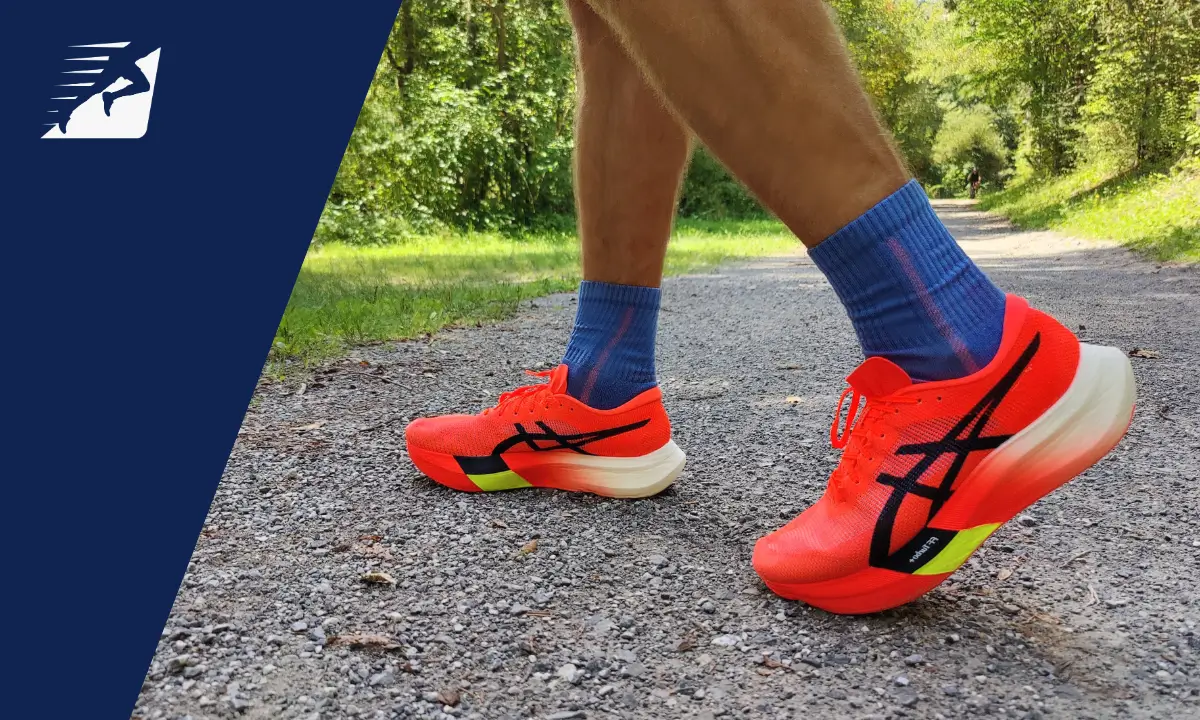
The most important piece of training equipment for runners is running shoes!
Even though we could theoretically run longer distances without running shoes (there was even an Olympic marathon champion, Abebe Bikila, who ran without shoes), these shoes are designed to protect us from injuries on the one hand and to improve running performance through enhanced comfort on the other. At least that’s the theory.
A significant number of recreational runners own only one single pair of active running shoes. However, this is not necessarily the best strategy. We recommend having at least a second pair of running shoes. It is important to ensure that actual “running shoes” are used for running training and not other types of sports shoes, such as neutral training shoes or sneakers. Running in such shoes can, in the worst case, even increase the risk of injury and negatively affect your running style.
But why should you own at least two pairs of running shoes?
Durability
Anyone who aims to run regularly over a longer period does not take any risk by purchasing several pairs of running shoes. The durability of a running shoe is not defined in months or years, but in kilometers run. Generally, you can expect a lifespan of 800 to 1,000 kilometers from running shoes. Significant variations are possible both upwards and downwards (extremely lightweight running shoes with a carbon plate may be worn out after around 300 kilometers). If you run about 3,000 kilometers per year, you could even buy six pairs of running shoes and be well equipped for the next two years. Ambitious runners can therefore avoid having to shop for shoes several times a year – although many runners actually enjoy doing so.
This means that durability is not an argument for owning only a small number of running shoes. On the contrary: if you make a strong purchase once, you will have to buy running shoes less frequently.
Longer Lifespan
Let’s stay with the topic of durability. There is actually a clear reason in favor of using at least two pairs of running shoes. If you give one pair a break from running, the shoe can properly dry out. This can even slightly extend the lifespan of the running shoe.
Another positive side effect: if you own at least two pairs of running shoes, unexpected damage to one pair or even its loss will not completely stop your running training. A second pair of running shoes therefore also serves as a backup.
More Strength, Fewer Injuries
Probably the most important argument for using different pairs of running shoes in training is the more efficient strengthening of the foot muscles and the resulting reduced risk of injuries or overuse problems. By constantly switching running shoes, our feet have to adapt to the conditions of different shoes. This leads to strengthening and reinforcing the now more flexible foot muscles. In turn, this results in a lower risk of injury.
This fact has even been scientifically proven. According to a study involving 264 participants, the risk of injury is reduced by almost 40 percent when more than one pair of running shoes is used for training.
Running Shoes for Competition, Running Shoes for Training
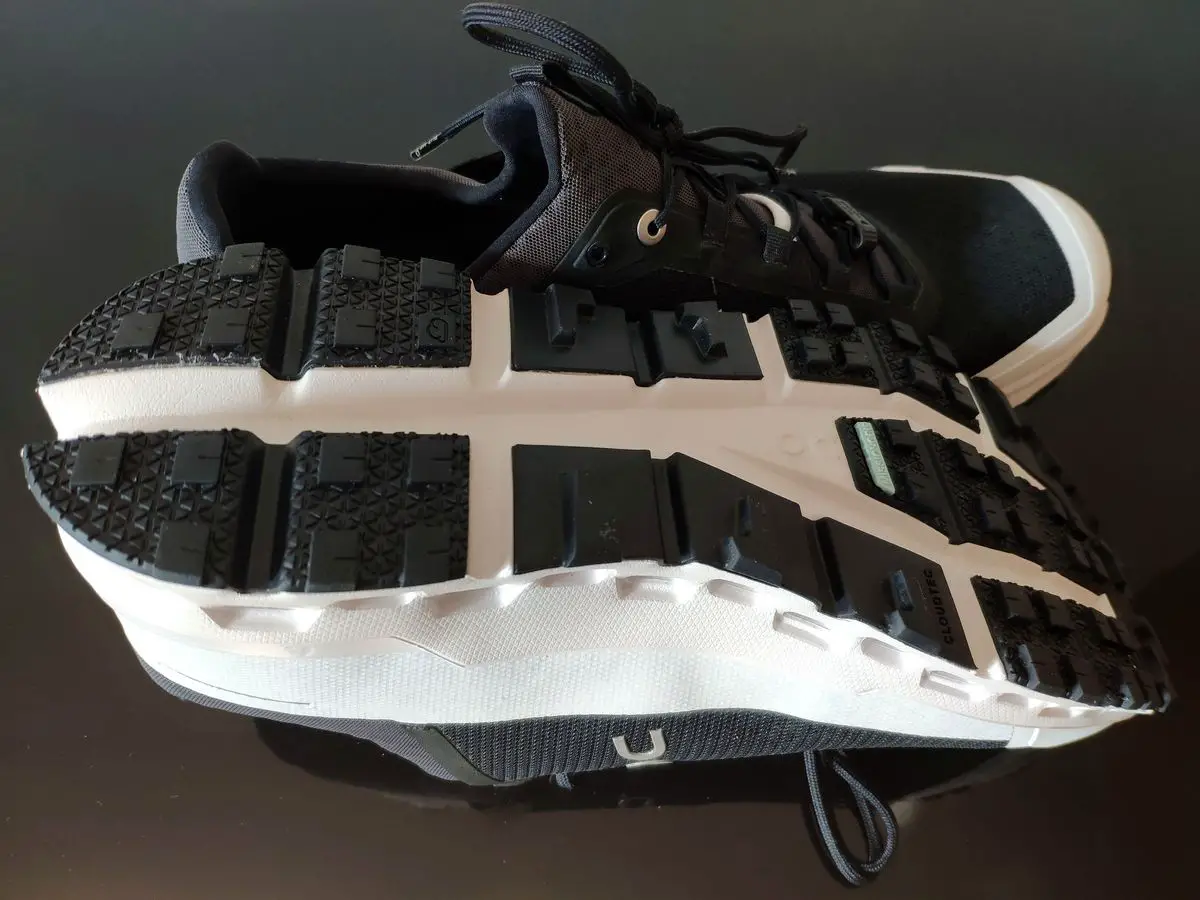
Many runners train for a long-term goal, such as a half marathon or a competition in general. There are different models for each purpose.
In competitions, lightweight running shoes are mostly worn. These are very light and are therefore recommended for fast running. For base endurance training, classic neutral shoes are sufficient, as they offer more cushioning than lightweight shoes. Runners with overpronation, on the other hand, are often recommended stability shoes with pronation support. However, the use of such support is controversial, as it also reduces the amount of work the foot has to do, which does not necessarily contribute to strengthening and stabilizing the foot muscles.
In the mountains, on trails, and off-road terrain, trail running shoes are used. These provide good grip and reduce the risk of falls on difficult terrain. Shoes with Gore-Tex or other water-repellent membranes protect against water and external moisture. They are particularly useful in winter when running in snow.
Barefoot shoes are also popular. These shoes have neither cushioning nor heel-to-toe drop and promote the most natural running style possible.
Therefore, anyone who trains in a very varied way will also need different types of running shoes.
Always the Same Running Shoe? Absolutely Not!
It makes little sense to buy the same model multiple times. Doing so eliminates almost all the benefits of alternating between different running shoes. In addition, your foot becomes too accustomed to the model. As a result, you will also be less flexible in your future choice of running shoes.

Our tip for beginners and recreational runners: Get one pair of well-cushioned shoes and one pair of lightweight shoes. The well-cushioned shoes are used for longer and easier runs. The lightweight running shoes are used for short races and intense training sessions, such as interval training or tempo runs.
Note: For treadmill training, we do not recommend heavily cushioned running shoes, as the treadmill already has a cushioning effect.
Summary: Advantages of Owning at Least Two Pairs of Running Shoes
- Longer durability
- Longer period until the next running shoe purchase
- Strengthening of the foot muscles
- Reduced risk of injury
- Reduced risk of overuse injuries
- Backup in case of loss or damage to one pair
- Different running shoes for different purposes
Rule of Thumb for the Number of Running Shoes
A rule of thumb states that you should own at least as many pairs of running shoes as the number of times you run per week. If you run five times a week, you should therefore have five pairs of running shoes in your repertoire. However, the duration of the training runs should also be considered. If you only run 30 minutes every day, you obviously do not need seven pairs of running shoes. In this case, two to three models are absolutely sufficient. An ambitious marathon runner, on the other hand, definitely needs a larger selection of running shoes.


Kommentar schreiben