

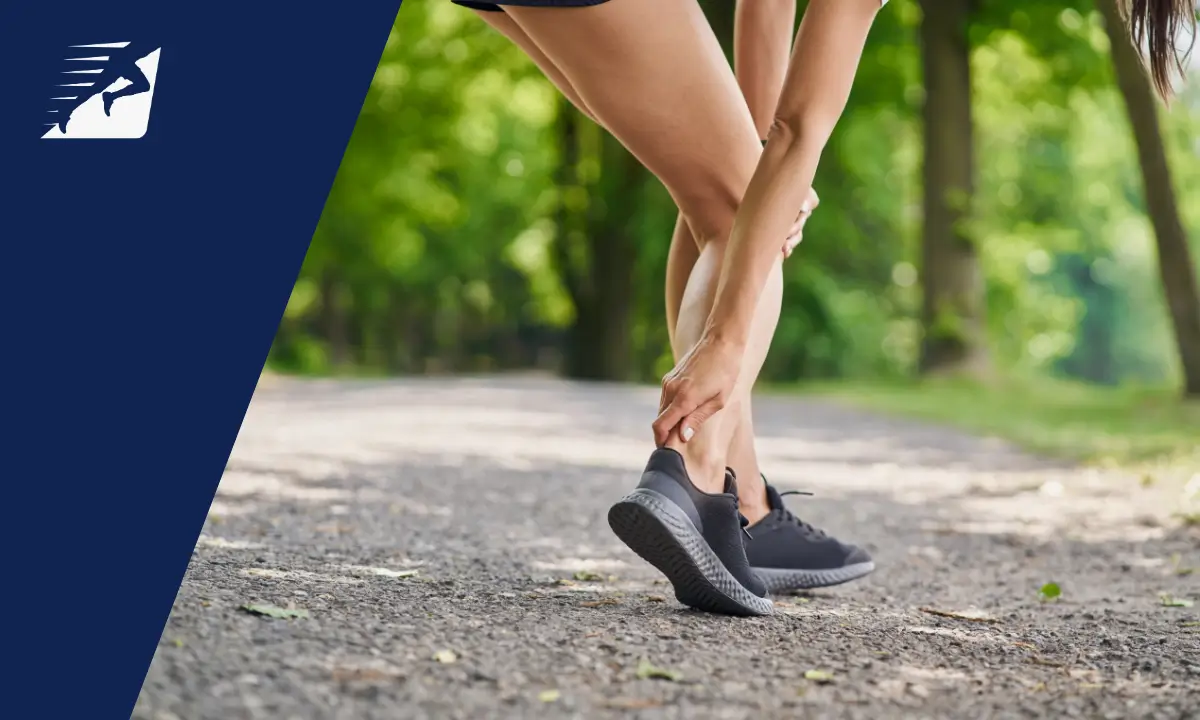
Achilles tendonitis is a common injury among runners and other athletes that can lead to significant limitations.
Since the Achilles tendon plays a key role in walking, running, and jumping, inflammation or injury to this tendon can have considerable effects on athletic performance.
In this article, HDsports explains the causes and symptoms of Achilles tendonitis, outlines treatment and therapy options, provides recommendations for rest and returning to running training, and presents alternative sports that can be practiced during the recovery phase.
What Exactly Is Achilles Tendonitis?
The Achilles tendon is the strongest and thickest tendon in the human body. It connects the calf muscles (the gastrocnemius and soleus muscles) to the heel bone (calcaneus) and enables us to push the foot downward, a movement that is essential for walking, running, and jumping.
Achilles tendonitis (also called achillodynia or tendinopathy) occurs when the tendon is overloaded and becomes inflamed. This overload can be caused by repeated microtrauma that accumulates over time. Achilles tendonitis occurs particularly frequently in runners, sprinters, and other athletes who perform intensive foot and leg movements.
Two main forms of Achilles tendonitis are distinguished:
- Insertional tendinopathy: This form affects the lower part of the tendon near the heel bone, where the tendon attaches to the bone.
- Midportion tendinopathy: This form affects the middle part of the tendon, located about two to six centimeters above the heel bone.
Symptoms of Achilles Tendonitis
The symptoms of Achilles tendonitis can vary depending on the severity and location of the inflammation. The most common signs are:
- Pain: The pain typically occurs at the back of the lower leg or above the heel. It is often worse in the morning and decreases during the day, but may increase again with activity, especially during running or jumping.
- Swelling: Swelling of the affected tendon may be visible and palpable. In some cases, the tendon is thickened.
- Stiffness: The affected tendon may feel stiff, especially after periods of rest or immediately after waking up.
- Tenderness: The Achilles tendon may be sensitive to pressure, particularly in the area of inflammation.
- Limited mobility: In severe cases, it may be difficult to fully flex or extend the foot, which restricts mobility.
What to Do in Case of Achilles Tendonitis: Treatment, Therapy, and Exercises
Early treatment of Achilles tendonitis is crucial to avoid complications and promote healing. Treatment can be conservative or, in rare cases, surgical.
- Immobilization and rest:
- Reduce or avoid activities that strain the Achilles tendon, especially running or jumping.
- In acute cases, temporary immobilization with a splint or cast may be necessary.
- Cooling and anti-inflammatory measures:
- Cool the affected area regularly with ice packs for 15 to 20 minutes, not directly on the skin, to relieve inflammation.
- Anti-inflammatory medications such as ibuprofen can help reduce pain and swelling. However, these should only be taken in emergencies.
- Physiotherapy and specific exercises:
- A targeted physiotherapy program is essential for healing. Eccentric exercises, in which the tendon is loaded while being stretched, have proven to be particularly effective.
- Exercises to strengthen the calf muscles, improve flexibility, and correct misalignments can also be helpful.
- Stretching exercises for the calf muscles and Achilles tendon should be performed carefully and regularly.
- Shockwave therapy:
- Shockwave therapy can be used to promote healing by increasing blood circulation in the affected area.
- Orthopedic aids:
- Special insoles or heel wedges can reduce strain on the Achilles tendon and support healing.
- Surgical intervention:
- In severe cases where conservative treatments are unsuccessful, surgery may be required to remove inflamed tissue or repair tendon tears.
How Long Should You Rest with Achilles Tendonitis?
The duration of rest depends on the severity of the inflammation and the individual response to treatment. In general, sports activities that strain the Achilles tendon should be avoided for several weeks to months. Resuming training too early can increase the risk of relapse and prolong the healing process.
Acute Phase
During the first two to three weeks, you should avoid any strain on the Achilles tendon and focus on rest, cooling, and anti-inflammatory measures.
Rehabilitation Phase
Once the acute symptoms have subsided, a targeted rehabilitation program can begin. This phase may last several weeks, during which the tendon is gradually reloaded.
Return Phase
A cautious return to running training is only advisable once there is no more pain and the tendon can bear weight again. This may be between four and twelve weeks after the first symptoms appear.
How Should You Return to Running Training After Achilles Tendonitis?
Returning to running training after Achilles tendonitis should be gradual and controlled to avoid relapses. Here are some important recommendations based on our experience:
Progressive Training
Start with short, slow runs on flat terrain. Avoid uphill and downhill running, as this places particular strain on the Achilles tendon. Increase the duration and intensity of training only gradually. A general rule is to increase running load by a maximum of 10 percent per week.
Gentle Interval Training
Initially incorporate walking breaks into your runs to reduce strain. An example would be a 1:1 interval of 1 minute running and 1 minute walking.

Technique Training
Work on your running technique to minimize strain on the Achilles tendon. Improved running technique can help correct unnatural movement patterns that may lead to tendon overload.
Continuous Stretching and Strengthening Exercises
Even after full recovery, stretching and strengthening exercises for the calf muscles and Achilles tendon should remain part of your training program to reduce the risk of relapse: Why is strength training important for runners?
Regular Shoe Checks
After Achilles tendonitis, wear well-cushioned running shoes that optimally support your foot and reduce impact. Have your shoes checked regularly and replace them when worn out. Only once the foot is well strengthened and stable again are lightweight running shoes recommended.
Pay Attention to Warning Signs
Watch for signs of renewed pain or discomfort in the Achilles tendon. At the first signs of renewed overload, reduce or pause training and, if necessary, consult a doctor or physiotherapist.
Which Alternative Sports Are Possible with Achilles Tendonitis, and What About Cycling?
During the healing phase, it is important not to overload the Achilles tendon while still remaining active. Some sports and activities are particularly suitable for maintaining overall fitness without placing excessive strain on the tendon.
Swimming is an excellent way to maintain cardiovascular fitness without stressing the Achilles tendon. Front crawl and backstroke are particularly gentle. Aqua jogging is another effective way to continue running training in the water. It simulates running on land but significantly reduces strain on joints and tendons.
Cycling is also generally a gentle alternative, as long as the intensity remains moderate and no pain occurs in the Achilles tendon. However, it is advisable to adjust the saddle height so that the heel is not excessively strained while pedaling. Avoid steep climbs and very low gears, as these can overload the tendon.
Of course, strength training is also recommended. Focus on exercises that strengthen the upper body and hips while minimizing strain on the Achilles tendon. Exercises such as bench presses, pull-ups, and core training are good options in this case. Yoga and Pilates can also help improve flexibility and balance without stressing the Achilles tendon. However, you should avoid exercises that lead to excessive stretching of the tendon.
Summary
Achilles tendonitis is a common and potentially long-lasting injury that mainly affects runners. Early symptoms such as pain, swelling, and stiffness should be taken seriously to prevent chronic progression. Treatment consists of a combination of rest, cooling, physiotherapy, and specific exercises. Returning to running training should be gradual and cautious, with alternative sports such as swimming, aqua jogging, and moderate cycling providing good ways to maintain fitness without further straining the Achilles tendon.
Through careful rehabilitation, continuous strengthening exercises, and good technique, most athletes can successfully return to training after Achilles tendonitis. It is crucial to pay attention to the body's warning signals and adjust training accordingly to avoid relapses.



Kommentar schreiben